
PetsCare — Designing a Shared Digital Pet Health Record
UX Design Competition Project | Focus: Research, Stakeholder Insights & Strategy
A concept-driven UX project exploring how pet owners, veterinarians, and clinics can collaborate through a unified health record system.
Role: UX/UI Researcher
Industry: Pets, Designer Competition
Date: Sep - Dec 2022
Background & Challenge

[About the Competition]
The Unicorn Designer Program is a competition designed to cultivate UX professionals. The team I participated in focused on the concept of a digital pet medical record system, aiming to reduce communication barriers between pet owners and veterinarians. Through a structured process of problem definition, competitive analysis, user interviews, and iterative product prototyping, we delivered a comprehensive proposal and conceptualized a promising digital solution.
[About the Project]
Pet medical records are often fragmented across clinics, paper documents, and personal notes.
For pet owners, this creates confusion and stress—especially during urgent or long-term care situations.
This project explored a core question:
How might we design a digital system that supports collaboration between pet owners, veterinarians, and clinics—while respecting their different needs and responsibilities?
Rather than starting from features, the challenge was to balance multiple perspectives and design a system grounded in trust, clarity, and shared understanding.
Understanding
I led and contributed to research across three key stakeholder groups to understand their goals, constraints, and pain points.
My role included:
Competitive analysis (fully led)
Interview guide design (co-led)
User flow
Insight synthesis & strategic framing
Usability testing participation
Competitive Analysis
Understanding the Gaps in Existing Pet Health Record Solutions
Analysis Scope & Criteria
The competitive analysis focused on digital pet health record and care-tracking products currently available on the market, including both core competitors and adjacent solutions.
The evaluation was guided by two primary questions:
For pet owners:
Can they easily and consistently record health-related data without feeling overwhelmed?For veterinarians:
Can relevant medical information be quickly extracted to support clinical judgment?
To answer these questions, competitors were assessed across the following dimensions:
Information architecture & navigation
Clarity of system feedback and status
Interaction consistency
New-user friendliness
Error prevention
Efficiency for both owners and professionals
Key Findings from Competitive Review
1. Usability Is Often Optimized for One Role—Not Collaboration
Most products showed a strong bias toward either pet owners or veterinarians:
Some tools allowed owners to log extensive daily data but made it difficult for doctors to locate critical information efficiently
Others prioritized medical detail but assumed users already had sufficient domain knowledge, resulting in poor onboarding and steep learning curves
👉 Insight:
Existing solutions treat health records as personal logs rather than shared decision-support tools.
2. Navigation and Information Hierarchy Are Frequent Pain Points
Across multiple competitors, issues repeatedly appeared:
Overloaded home screens with low-priority features surfaced too early
Inconsistent navigation patterns between main pages and sub-pages
Key actions hidden behind unclear icons or mislabeled menu items
These issues increased cognitive load—especially for users under stress.
👉 Insight:
When information hierarchy is unclear, users spend time searching instead of understanding.
3. Language and Feedback Undermine Trust
Several competitors suffered from:
Poor or incomplete localization
Ambiguous system feedback
Unclear status indicators during data input or loading
For a domain closely tied to emotional stress and responsibility, these details significantly affected user confidence.
👉 Insight:
In healthcare-related contexts, clarity and reassurance are as important as functionality.
4. Feature-Rich Does Not Equal Beginner-Friendly
While some platforms offered extensive functions and visualized historical data, they often lacked:
Clear onboarding flows
Contextual explanations for medical terms
Progressive disclosure of complexity
As a result, new users struggled to understand what to do next.
👉 Insight:
Without intentional guidance, feature richness becomes a barrier rather than a benefit.
Design Opportunities Identified
Synthesizing research across pet owners, veterinarians, and clinics revealed that the core challenge was not missing features, but misaligned expectations and responsibilities between stakeholders.
Several design opportunities emerged to address this complexity:
Layered information structures that allow users with different levels of medical knowledge to access the same record without being overwhelmed
Timeline-oriented records that frame medical data as an ongoing care journey instead of isolated entries
Calm, human-centered language that acknowledges emotional stress and supports decision-making in moments of uncertainty
Rather than competing on feature completeness, PetCares reframes the problem as one of coordination, responsibility, and trust; designing a shared system that supports informed collaboration across stakeholders.
How This Analysis Shaped the Design Direction
Rather than evaluating competitors by feature sets or interface patterns, this analysis focused on how existing solutions frame responsibility, collaboration, and trust among pet owners, veterinarians, and clinics.
By examining where current products fail to align these roles, often prioritizing individual usage over shared understanding, the analysis helped clarify a central design intention:
“A pet health record should not merely store data—it should support collaboration, trust, and timely understanding. “
This insight became a foundational principle guiding the system architecture, user flows, and experience strategy of PetsCare.
Stakeholder Research
🐶 Pet Owners
Struggle to track medical history across clinics
Experience anxiety when information is incomplete
Want reassurance and follow-up care tips
🩺 Veterinarians
Limited consultation time
Need fast access to accurate medical history
Concerned about data reliability
🏥 Clinics (Contextual Stakeholder)
Not a direct user of the system, but part of the broader medical context
Influence how medical records are created and referenced, rather than how they are managed
Highlight the importance of data credibility and consistency across care episodes
Clinics were considered as contextual stakeholders, helping frame realistic constraints around medical records, without being positioned as primary users of the system.
Key Insights
From synthesizing research across stakeholders, several critical insights emerged:
No single user owns the entire medical journey.
Any effective solution must support collaboration rather than individual optimization.Trust is more important than feature richness.
Accuracy, source clarity, and responsibility matter more than advanced functions.Information needs differ by role and moment.
The same data must be presented differently depending on context and urgency.Emotional reassurance is part of the experience.
Especially for pet owners, medical records are tied to anxiety and care responsibility.
Key Insights
✨
Key Insights ✨
Transform
Instead of focusing on interface-level design, the project centered on defining a system logic that supports communication and understanding between pet owners and veterinarians.
Key strategic decisions included:
A shared medical record between pet owners and veterinarians
Designed as a communication bridge, allowing both parties to reference the same information during consultations and follow-ups.Timeline-based organization
Medical information is structured chronologically to help users quickly build context and understand progression, rather than navigating isolated data entries.Context-aware information presentation
The same record supports different needs, an overview for owners, and a clinical context for veterinarians, without enforcing rigid role-based permissions.A calm and supportive tone of voice
Language and feedback are designed to reduce anxiety and help users feel guided rather than overwhelmed, especially during medical uncertainty.
User Journey
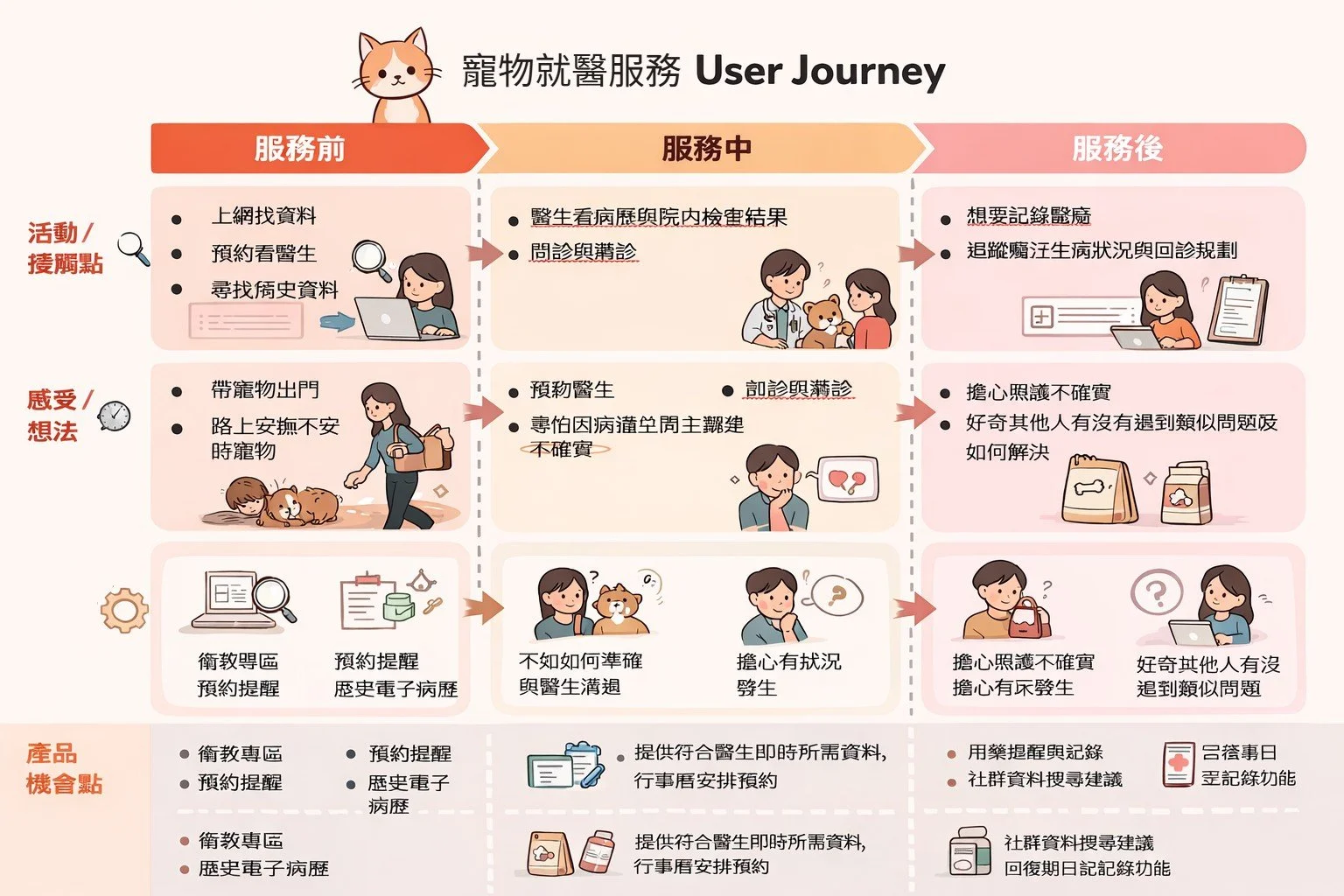
User Flow
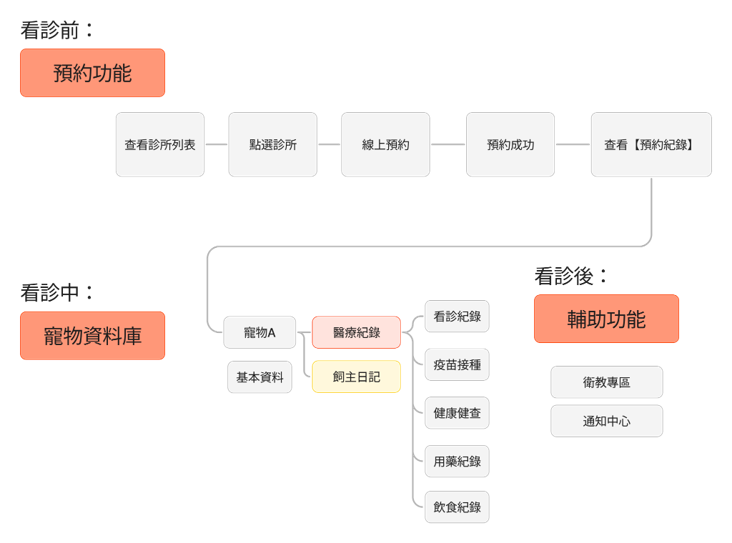
Flows were designed to reduce cognitive load while supporting quick decision-making.
Usability Testing & Iteration
Usability testing was conducted to evaluate whether the proposed system structure and information flow aligned with user expectations and mental models.
Through scenario-based walkthroughs and task simulations, several patterns emerged:
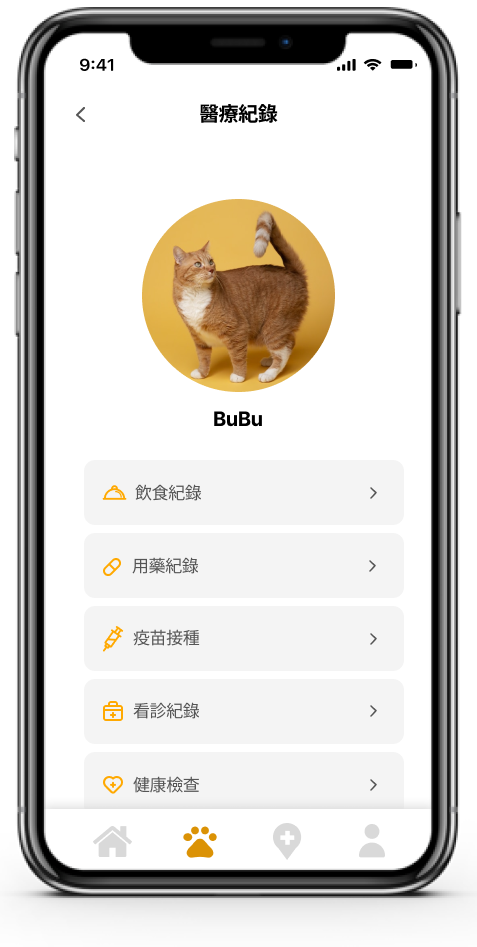
Pet owners responded positively to the timeline-based view, reporting a stronger sense of reassurance when they could see medical history as a continuous care journey rather than fragmented records.
Veterinarians were able to build context more quickly, using chronological information to understand prior conditions and treatments before engaging in discussion.
Both groups expressed sensitivity to language and presentation, leading to iterations that simplified terminology, reduced visual noise, and clarified status feedback.
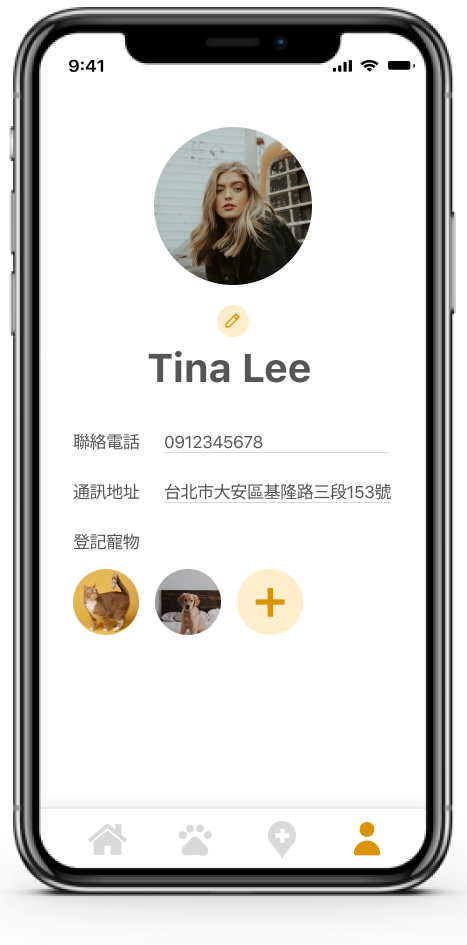
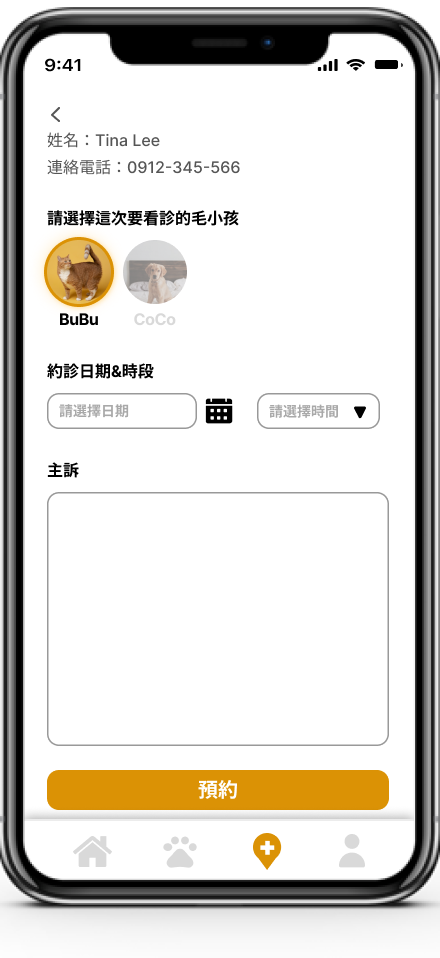
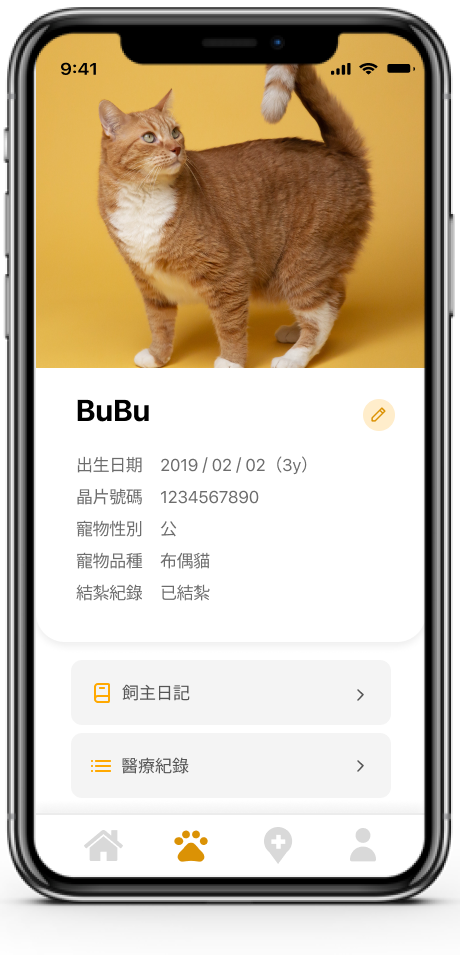
Based on these observations, refinements focused on improving information grouping, reducing cognitive load, and reinforcing a calm, supportive interaction style rather than adding new features.
“It feels less like a database, and more like a shared understanding.”
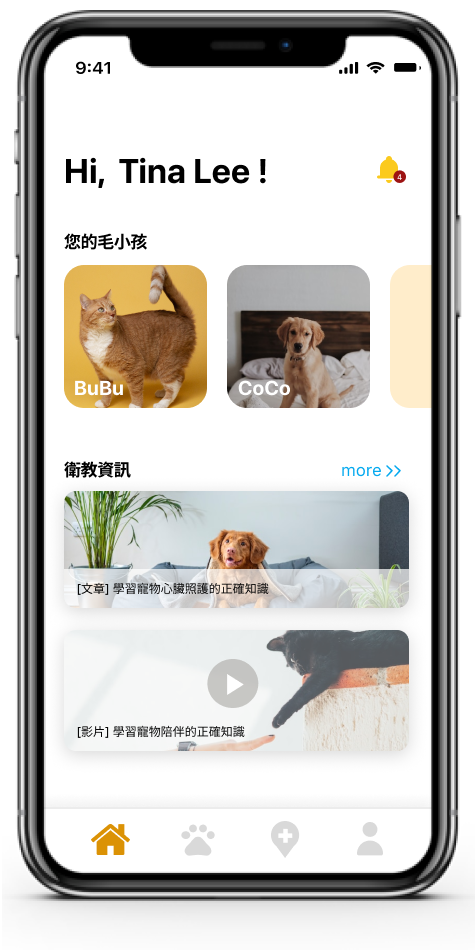
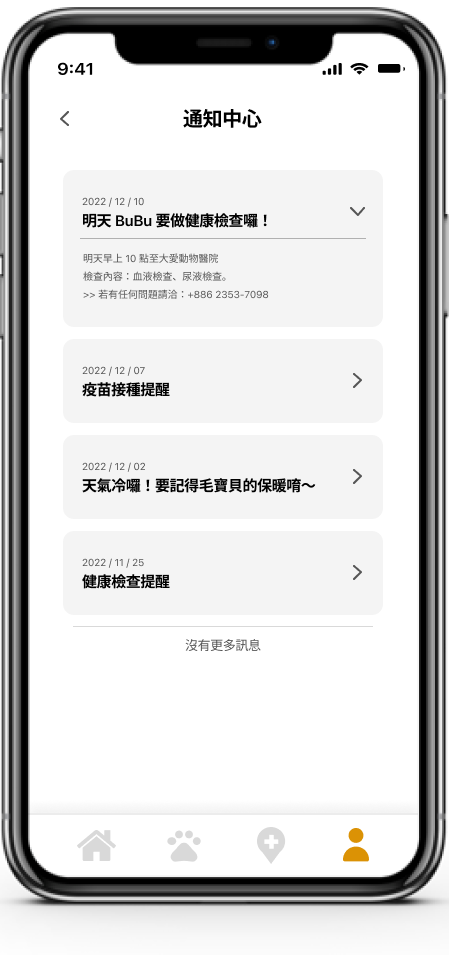
Reflection
PetsCare represents how I approach UX beyond interfaces:
Designing systems that balance structure and empathy,
and translating complex, multi-stakeholder needs into intentional experiences.
This project strengthened my interest in UX strategy, service design, and research-driven decision-making, especially in domains where trust and responsibility are central.

Make a Contact Today
Want to learn more about my design?